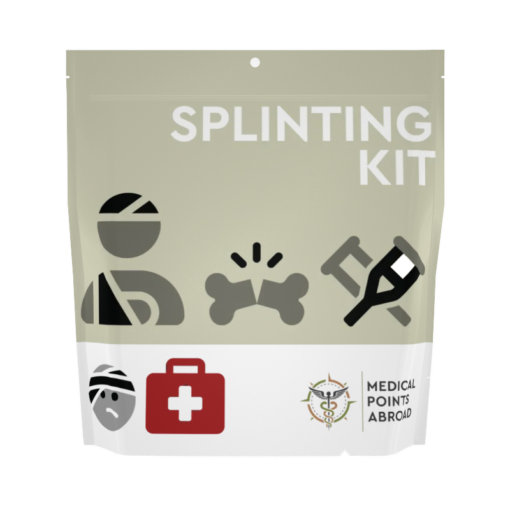

So, you’ve decided you need a splinting kit. Either you’re a responsible adult who spends time outdoors, or you just like collecting things that make TSA agents nervous. Either way, congratulations. Let’s walk through what’s actually inside this bag—and clear up what it’s not going to do for you.
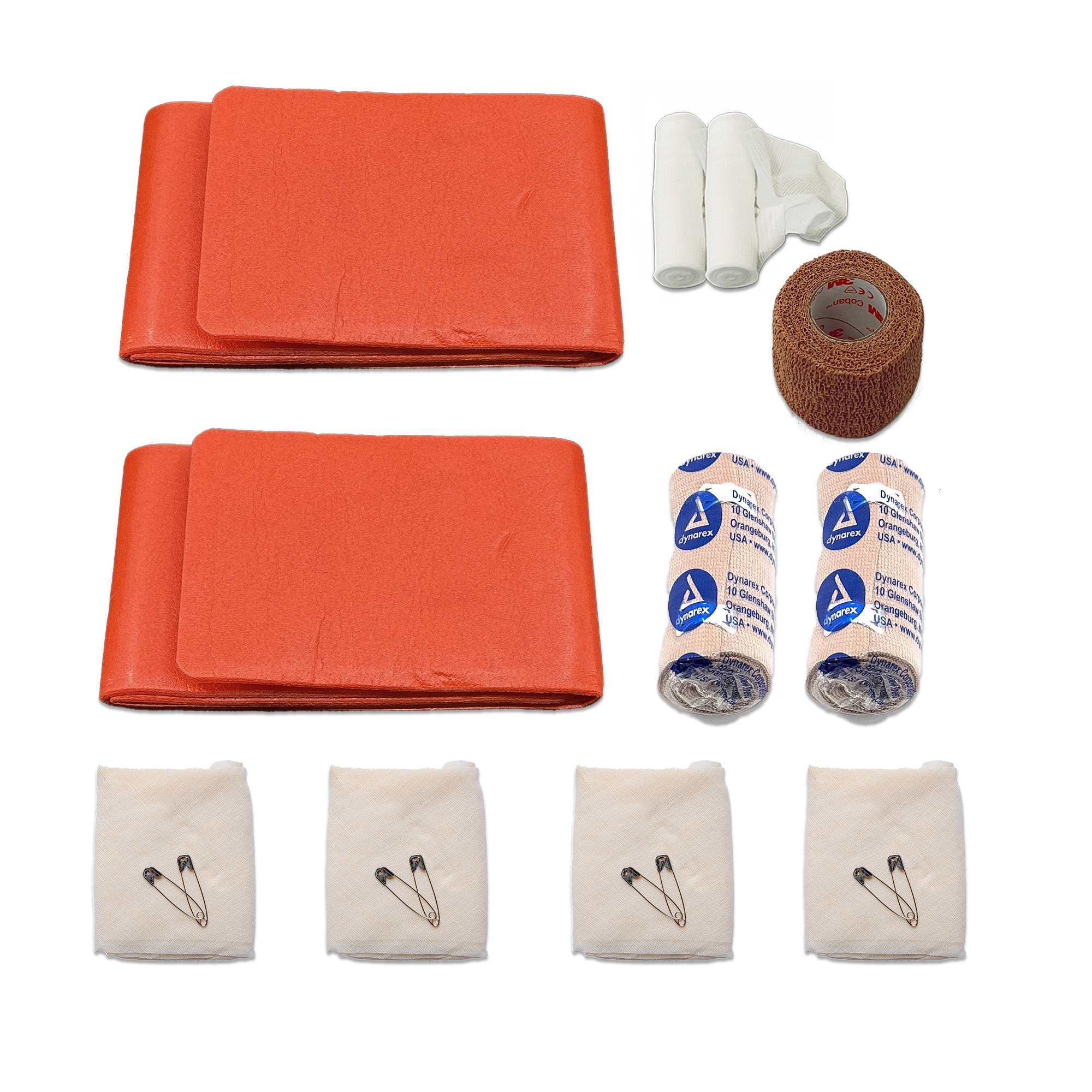
(2) Aluminum Splints
These are your bread and butter. Moldable strips of aluminum with a thin foam cover that turn floppy limbs into less-floppy limbs. Bend them into shape, wrap them up, and suddenly your hiking buddy’s busted wrist looks like something from a low-budget sci-fi movie. They’re rigid, reusable, and they don’t care if you’re splinting a person, a dog, or that one friend who insists on trying parkour after whiskey.
What they won’t do: Realign a spine. Stabilize a femur. Turn you into MacGyver. If that’s your emergency, call someone with a helicopter. [Image: Hands shaping aluminum splint]
(4) Cravats
Also known as triangular bandages. Fancy name, simple job: they’re giant cotton napkins you fold, twist, and tie until stuff stops moving. Need a sling? Cravat. Need to lash a splint? Cravat. Need to look like an old-timey train robber? Cravat. Versatility is the whole point, which is why we gave you four. Because two will inevitably end up filthy, one will get used as a dog leash, and the last one is the hero that saves the day. [Image: Cravat folded into an arm sling]
(2) Elastic Bandages
These are the stretchy wraps that hold your masterpiece together. Think of them as the duct tape of splinting—except they’re breathable and don’t rip off arm hair like a medieval torture device. They keep the splint snug, but here’s the trick: snug does not mean tourniquet. If your patient’s fingers or toes turn Smurf-blue, you’ve gone too far. Unwrap, redo, apologize. [Image: Elastic bandage wrapped neatly around wrist splint]
(1) Roll of Coban/Vet Wrap
This stuff is magic. It sticks to itself, not to skin, not to hair, not to bad decisions. It’s what you use to lock down the final layer and make your splint look like you almost know what you’re doing. Bonus: if you’re treating a furry four-legged friend, Coban will stay put without turning the removal process into a grooming session from hell. [Image: Coban being wrapped over gauze]
(2) Rolled Gauze
The unsung hero of comfort. Rigid materials pressing against skin = pressure sores. Pressure sores = new problems you didn’t need. Rolled gauze fixes that. Use it as padding, use it as filler, or just use it to look competent in front of your friends. Two rolls mean you can be generous instead of rationing every inch like it’s gold leaf. [Image: Rolled gauze layered under splint]
Why Two Complete Sets?
Because one splint kit is never enough. Sometimes two people get hurt (looking at you, “let’s race down the scree slope” couple). Sometimes one person manages to break multiple limbs at once. And sometimes you just screw up the first attempt and need a do-over. Having two full sets means you’re not stuck playing rock-paper-scissors over who gets stabilized and who just gets “thoughts and prayers.” [Image: Two arms splinted side by side]
What This Kit Can’t Do
- It won’t fix your femur. That’s a helicopter problem.
- It won’t straighten your spine. Also, a helicopter problem.
- It won’t work on jellyfish, spiders, or eight-legged goats. (Once you buy it, though, it’s your circus.)
- It won’t stop bad life choices. Sorry, that’s on you.
Final Thoughts
Splinting kits aren’t glamorous. They don’t stop massive bleeds or restart hearts. But when something bends that shouldn’t, they turn chaos into control. Our kit gives you the gear (and the backups) to do it right, whether you’re patching up a trail partner or your dog that decided barbed wire looked fun. It’s simple, it’s compact, and it works—unless, of course, you’re trying to treat a jellyfish. In which case, good luck with that.